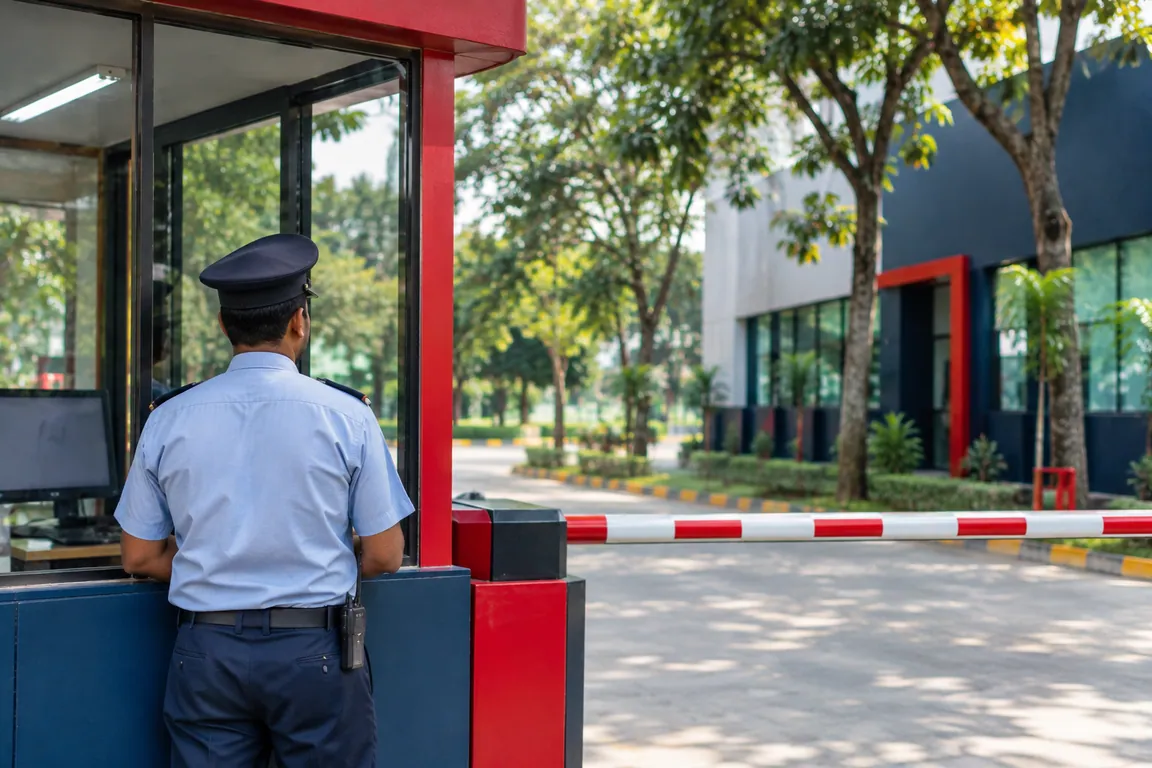
NFC badge attendance: one tap to punch in or out.
With NFC badge attendance, a worker taps a card on a reader and the punch is saved. Zentaro Pulse is built for MIFARE, NTAG, FeliCa and ISO14443 cards. Each tap alternates between in and out, and every tap goes into an audit log.
- Tap to punch
- In and out take turns
- Common card standards
- Audit log of taps
Without it
- A long queue forms at the gate at shift change.
- Workers without phones cannot mark attendance.
- Cards are used for the door but not for attendance.
What it does.
Tap to punch
A worker taps a card. The punch takes about as long as a tap.
In and out take turns
The first tap is IN and the next is OUT. Nobody has to choose a button.
Common card standards
Built for MIFARE, NTAG, FeliCa and ISO14443 cards, which are the common types used for badges.
Audit log of taps
Every tap is logged with the card, the time and the device.
How it works.
-
Step 1.
Link a card to a person.
In the console, link each card to an employee.
-
Step 2.
Set up a reader point.
Set up the gate device that reads the cards.
-
Step 3.
Workers tap in and out.
Each tap saves a punch and flips between in and out.
-
Step 4.
Check the log.
Managers review the tap log and fix any mistakes through an approved correction.

The problem you know
What goes wrong without it.
- Slow gates at shift start. A tap is much quicker than a form or a register.
- Not everyone has a phone. Many workers have a card but no smartphone.
- Taps that are not recorded. A tap with no log cannot be checked later.
What it is not
- It does not need a smartphone for every worker.
- It does not ask people to choose between in and out. The taps take turns.
Who it is for.
Who it is for
- Factories and warehouses with a fixed gate
- Sites with many workers and few phones
- Teams that already use staff ID cards
Want to see how it fits your team? Talk to us
What hardware do I need?
| Question | Answer |
|---|---|
| What reads the card? | An Android phone or tablet with NFC, running the Zentaro Pulse app. A separate reader box is not part of what we describe. |
| Which cards work? | The software recognises MIFARE, NTAG, FeliCa and ISO 14443 cards. We have not recorded tests with named card models, so tell us which card you use and we will confirm. |
| How do I give a card to a person? | In the console, an admin links the card to one employee. Each card number can be used once in your account. |
| What if a card is lost? | An admin deactivates the card. It stops working, and its record is kept for the audit trail. |
| What if someone taps twice? | A quick double tap of the same card counts as one punch. |
Questions people ask.
What is NFC attendance?
It is marking attendance by tapping an NFC or RFID card on a reader. Zentaro Pulse launches in February 2027.
Which cards work with Zentaro Pulse?
It is built for MIFARE, NTAG, FeliCa and ISO14443 cards. We have not published a tested list of card or reader models, so ask us about yours.
How does it know if a tap is in or out?
Taps alternate. The first tap of a pair is IN and the next is OUT.
Can one card be shared by two people?
Each card is linked to one employee, and every tap is logged, so a shared card shows up in the history.
What hardware do I need?
An Android phone or tablet with NFC runs the app and reads the card. Tell us which cards you use and we will confirm.
Is there a record of every tap?
Yes. Each tap is saved in an audit log.
Be first to hear when Zentaro Pulse launches
Zentaro Pulse is launching in February 2027. Join early access and we will tell you first. Or ask us a question now.
Last updated: